


Material Science with Ray from Igneous Gear ✨


Material Science with Ray from Igneous Gear ✨
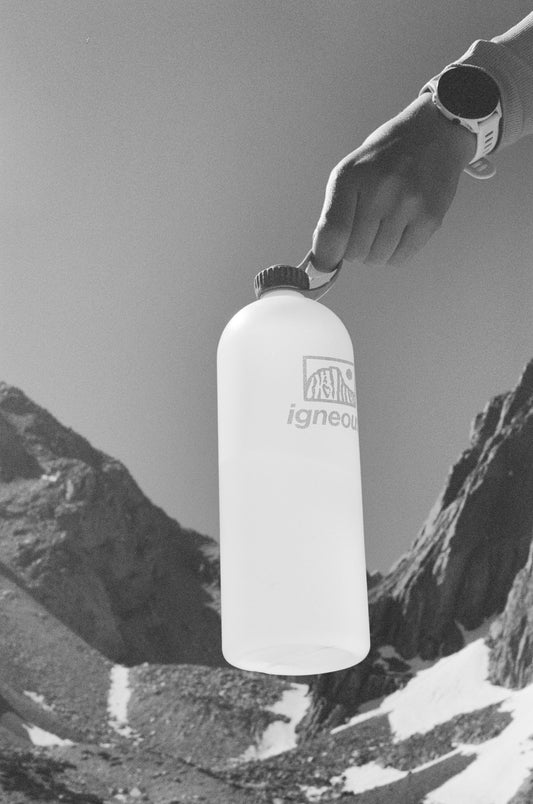
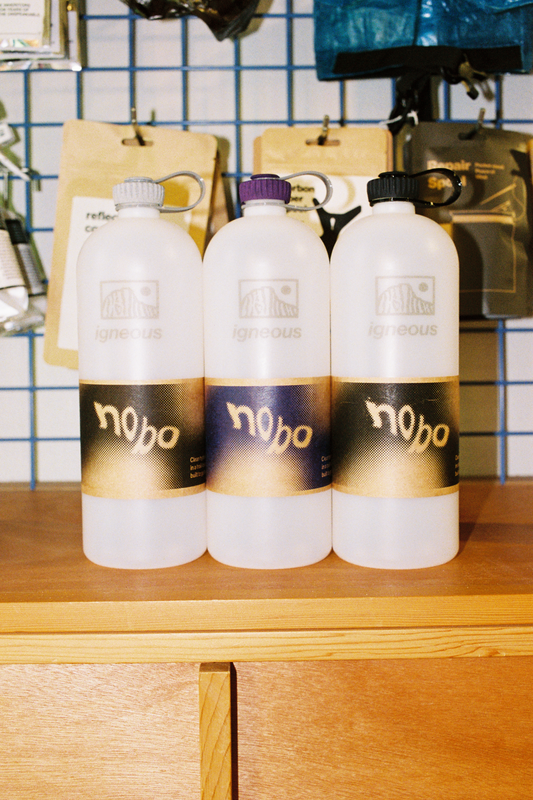
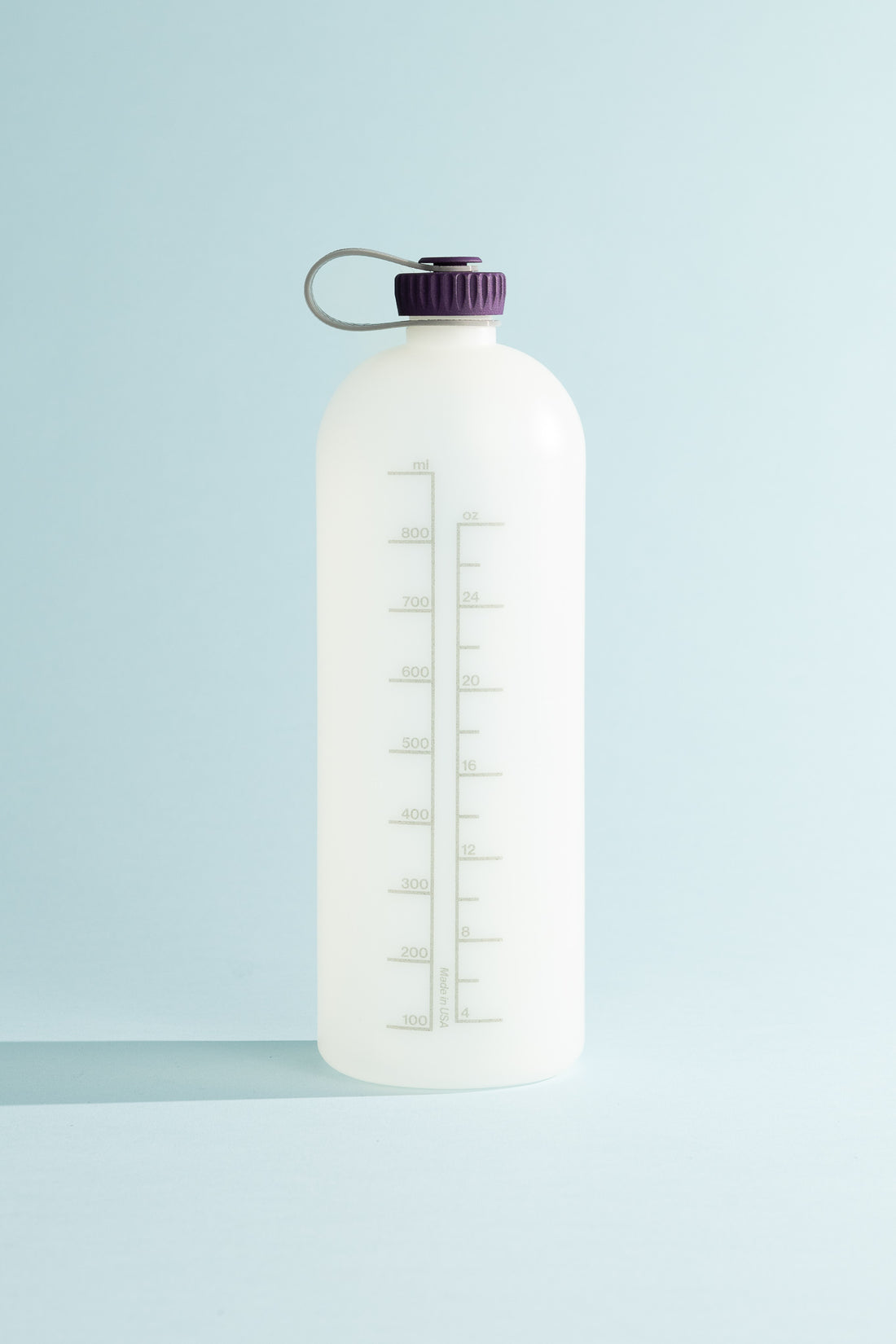
If you’ve carried the same bottle for weeks on a thru-hike, you’ve probably seen it change—surfaces turning tacky, odors lingering, or the body going brittle after long days in sun. Those aren’t quirks; they’re visible signs of polymer fatigue: UV-driven chain scission, micro-crack propagation, and biofilm colonization. The NOBO Bottle was designed to resist those effects from the molecular level up. Every choice—from its 0.87 mm wall thickness to the geometry of its cap—reflects how polymers actually behave after thousands of hydration cycles in real backcountry conditions.
At the core is high-density polyethylene (HDPE), a food-contact compliant polyolefin built from repeating (C₂H₄)n units. HDPE’s semi-crystalline microstructure (lamellae of densely packed chains) provides high tensile strength and excellent resistance to environmental stress cracking. Its non-polar backbone (C–C and C–H only) is chemically inert and hydrophobic, so it resists odor uptake and makes it harder for organic residues to adhere. Compared with PET or LDPE, the crystalline regions in HDPE slow oxygen diffusion, delaying oxidation and embrittlement under UV. It also retains ductility across a wide service range (≈ –100 °C to 80 °C) and has low surface energy (~31 mN/m), which translates to less biofilm adhesion and easier cleaning.
Chemistry and structure translate directly into hygiene. PET (typical disposable bottles) is more polar (surface energy ~43 mN/m), so hydrophilic residues bind more readily and biofilms establish faster. Cleaning PET can roughen amorphous zones over time, creating micro-pits that trap contaminants and hold odors—especially after flavored mixes or unfiltered sources. HDPE, by contrast, maintains a smoother profile after abrasion, repels aqueous residues better, and tolerates aggressive scrubbing without prematurely roughening the surface, so you need fewer deep cleans to keep it fresh.
LDPE shares HDPE’s chemistry but not its performance. Extensive chain branching lowers crystallinity and stiffness, so LDPE creeps under sustained loads; threads and sealing surfaces lose dimensional accuracy sooner, and abrasion marks accumulate quickly (harder to sanitize thoroughly). It’s also more permeable to oxygen and organic vapors, so flavors/odors transfer faster, and it exhibits more cold-flow/warpage at heat. Great for soft pouches; not ideal for a rigid bottle that’s squeezed and torqued for years.
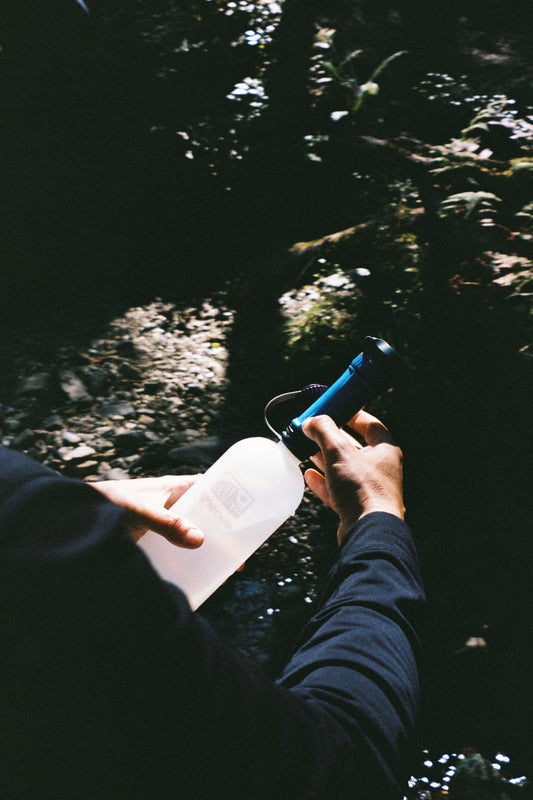
The NOBO’s 81 mm OD and 0.87 mm wall balance squeeze efficiency, pocket security, and structural longevity. A slightly stouter stance lowers the center of mass in side pockets, making the bottle less likely to eject when you bend or scramble. Geometrically, hoop stress scales with σ = (P × r)/t, so keeping radius modest and walls properly tuned limits deformation without adding weight. The elasticity is dialed for filtration with flat-gasket-sealing accessories while resisting collapse during one-handed drinking. (The mouth is slightly narrower than a Smartwater bottle; anything that seals on the internal lip—e.g., HydroBlu Versa Flow—won’t seat. Standard 28-410 flat-gasket accessories/filters do.)
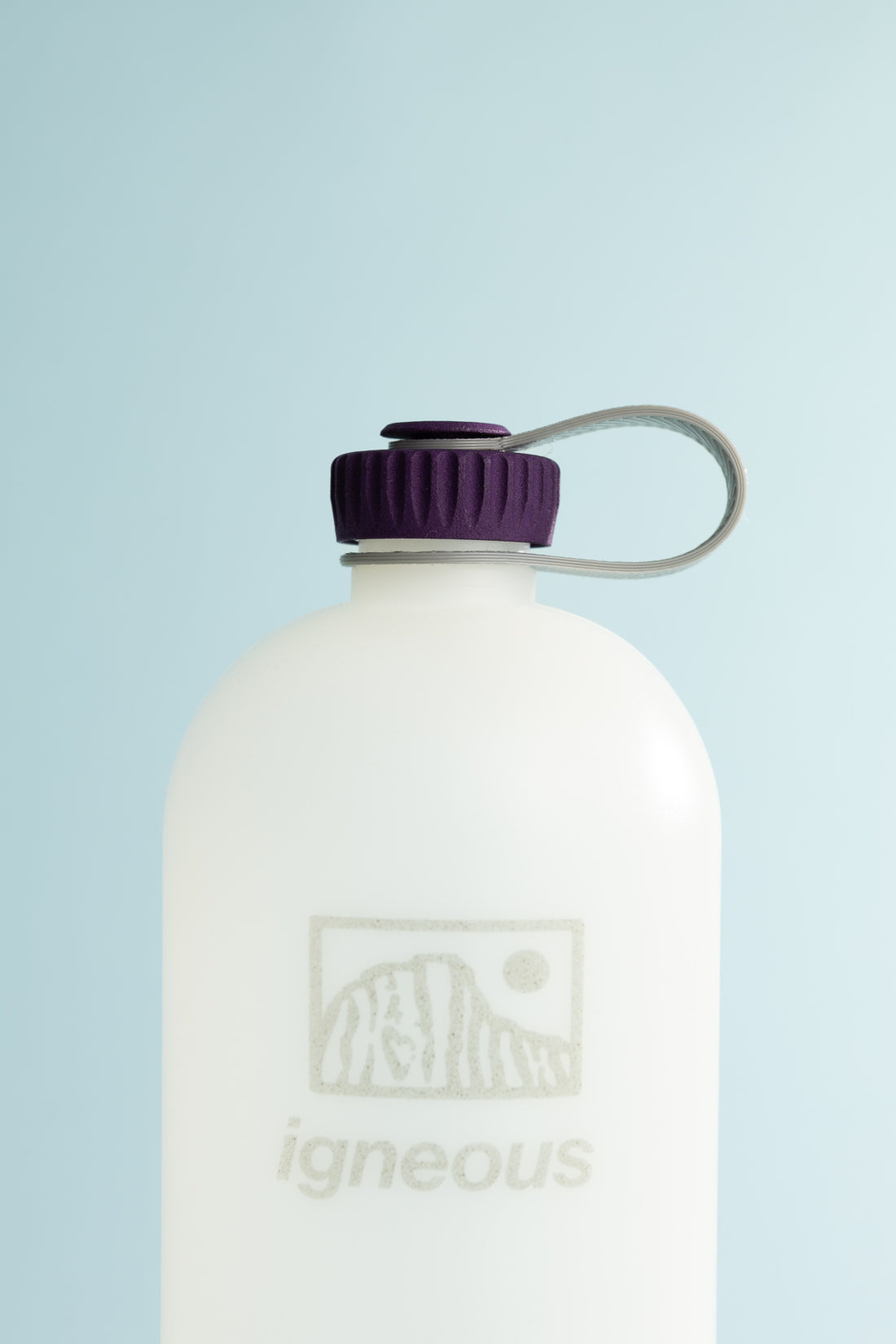
The tether is TPU (thermoplastic polyurethane), a segmented elastomer with alternating soft polyol and hard urethane domains. That morphology gives it high tear resistance, large elongation at break, and cold-weather flexibility. It’s not merely decorative: the loop has a tensile load rating > 25 kg, so grabbing and carrying the bottle by the tether is structurally sound.
Under cyclic compression and abrasion, PET containers can shed orders-of-magnitude more nanoplastic once embrittlement begins, whereas HDPE’s crystalline density slows crack initiation and propagation, reducing particle generation during equivalent use. Practically, that means a lower micro/nanoparticle load in stored water over multi-week reuse.
HDPE’s ~120 °C melt point lets the bottle tolerate near-boiling water (≈ 95–100 °C) for cleaning or to remove minor squeeze creases without structural compromise. Its low glass transition and ductility give excellent freeze–thaw stability, with minimal risk of ice-expansion cracking. In sunlight, unpigmented HDPE will eventually develop surface oxidation and chalking (whitening from carbonyl formation), but this occurs after thousands of hours of high-altitude exposure—far outlasting PET (which tends to yellow and embrittle) and LDPE (which softens and turns tacky) under comparable UV.
Compression cycling: 10,000 squeezes at 50 N—no rupture; minor creases recover with hot water.
UV exposure: 5,000 hours simulated high-altitude sun—>95% tensile strength retained.
Impact: 10 m drop onto granite at –10 °C—no cracking; full cap-seal retention.
The semi-crystalline body scatters light evenly (classic Mie scattering), so a headlamp aimed through the bottle produces a soft, diffuse camp glow. The hydrophobic surface chemistry keeps cleaning intervals low, and the tether loop works as a true load-bearing grab point. From polymer chain architecture to sidewall curvature, the NOBO is built for ultralight realities: stable in pockets, compatible with flat-gasket filters, resistant to odor and biofilm, and durable over thousands of miles.